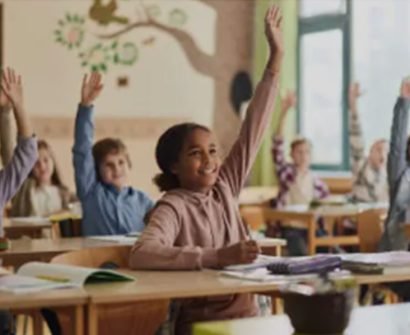
The bell rings, but it doesn’t signal the start of a regular school day. Instead, it marks the opening of a space alive with curiosity, buzzing with ideas, and humming with possibility. Lila steps in, her backpack light, her mind heavy with questions she can’t wait to explore. In one corner, a 3D printer whirs; in another, a group sketches designs for a solar-powered water purifier. Desks are clustered, whiteboards are crowded with ideas, and every student seems to be chasing a challenge that doesn’t yet have an answer.
Just a few years ago, a classroom meant memorizing formulas and regurgitating facts. This classroom is unlike any her parents experienced. No longer is learning confined to textbooks or memorized formulas. Today, it’s about asking “what if?” and seeing where curiosity leads. Today, it’s a laboratory for curiosity, a studio for creativity, and a launchpad for the future. Lila programs a small robot to carry materials across uneven terrain. It tips over. She laughs, adjusts, tries again. Failure is no longer a setback, it’s a stepping stone. And in those steps, she discovers resilience, creativity, and the thrill of figuring out problems the world hasn’t yet solved.
Outside these walls, the world moves at a dizzying speed. Artificial intelligence writes code, renewable energy creates careers that didn’t exist a decade ago, and industries evolve faster than anyone can predict. In this landscape, knowledge alone isn’t enough. What matters most is adaptability, critical thinking, and the courage to invent solutions before anyone even knows they’re needed. Lila realizes that every challenge she faces here, every late-night brainstorm, every collaborative experiment, is preparing her for that unpredictable future.
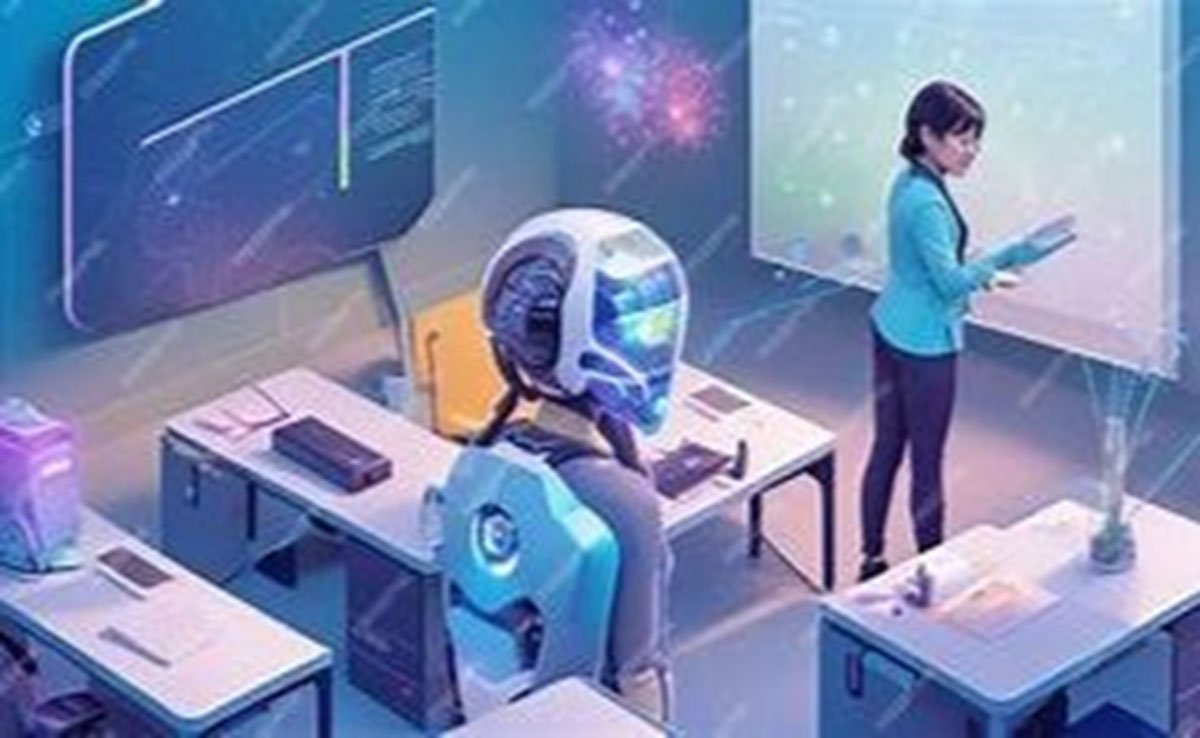
Teachers no longer simply deliver knowledge, they craft experiences that shape the way students see the world, equipping them to face challenges that haven’t even been invented yet. Lila’s teacher watches as her class debates the best design for a water filtration system. She doesn’t offer solutions; she guides, encourages, and inspires. Her lessons are not confined to technology. In the art studio, she designs a prototype of a low-cost sustainable backpack, blending creativity with practicality. In the virtual lab, she simulates chemical reactions, learning not just formulas but cause, effect, and experimentation. And through video calls with students halfway across the globe, she discovers the power of collaboration, empathy, and perspective. The world is larger than her town, and learning to navigate it requires more than facts, it requires curiosity, courage, and connection.
As the day ends, Lila packs her bag, not with textbooks, but with confidence, imagination, and the quiet certainty that she is ready. Ready to face a future that is constantly shifting, full of challenges no one could have predicted. In classrooms like hers, students everywhere are discovering the same truth: education is not about memorizing the past; it’s about preparing to shape the future. And for those who embrace it fully, the possibilities are limitless.